.jpg?width=1600&height=1067&name=nihi_sumba_familienluxusreisen%20(17).jpg)

The life of the Himba in the remote Kaokoveld between tradition and change
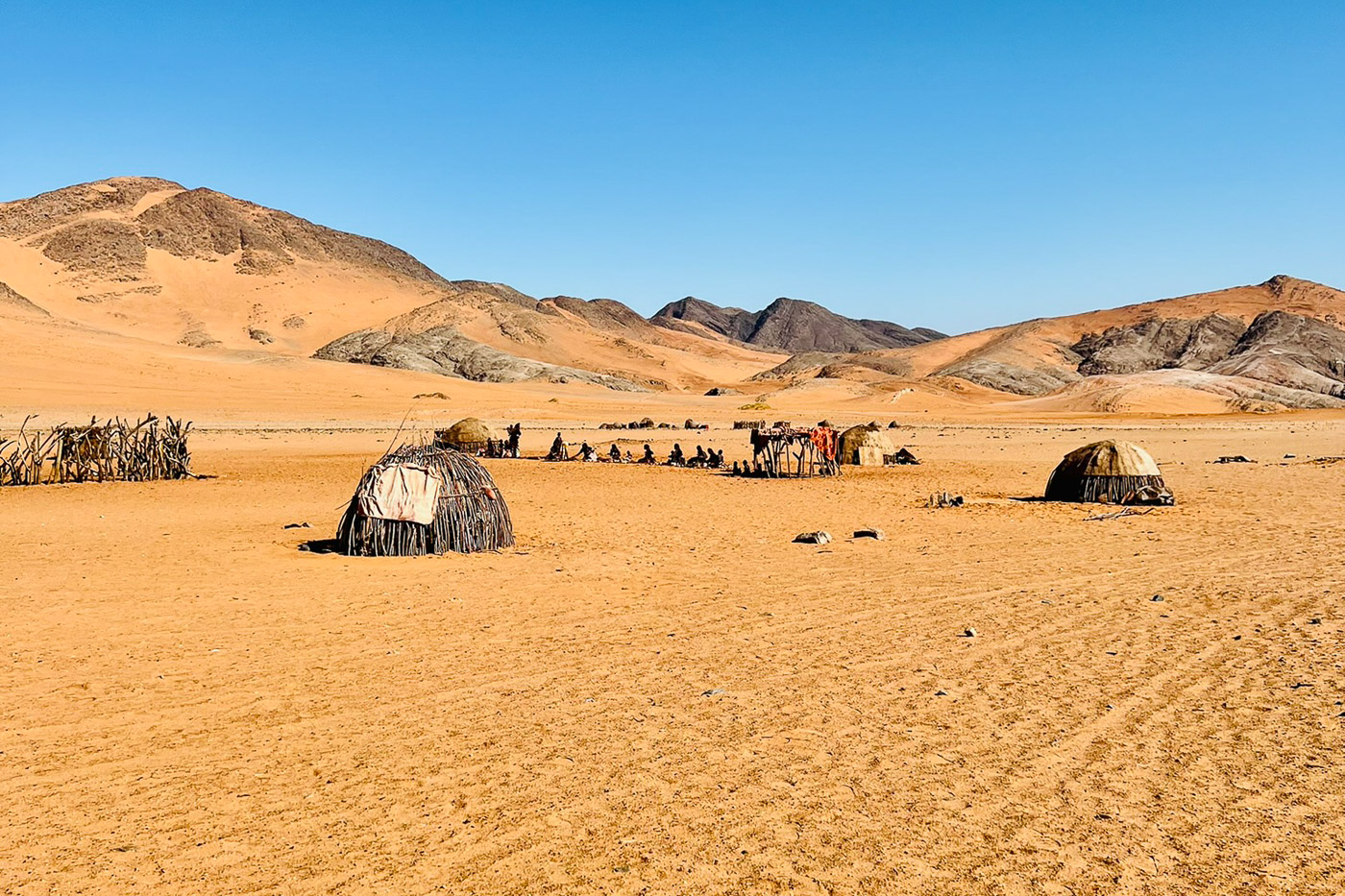
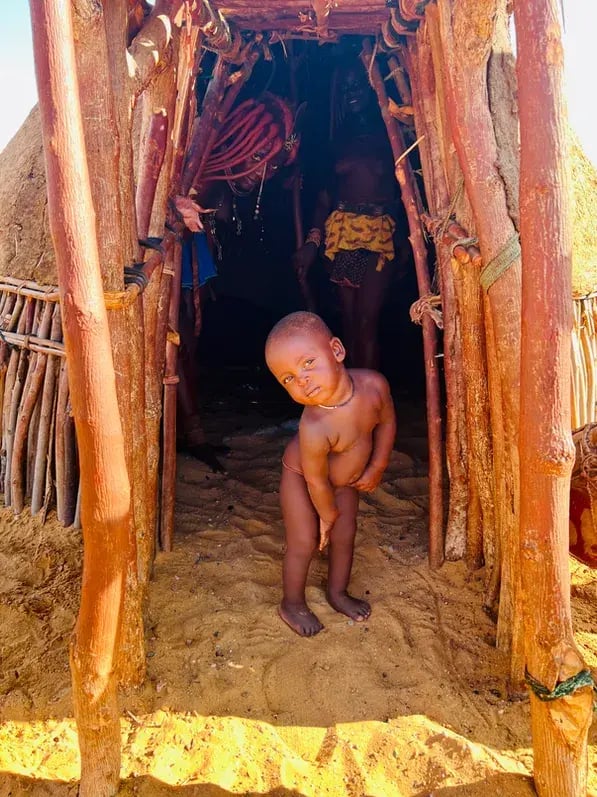
In the sparsely populated Kaokoveld, vast plains alternate with rugged rock formations. The remote region in the north-west of Namibia on the border with Angola seems unreal and inhospitable and yet it is captivating. Far away from the main gravel roads, away from civilization, without electricity and running water, this is the home of the Himba.
The nearest major town to the Kaokoveld, Opuwo, is not only the only town with a supermarket and a petrol station; this is where Himba tradition and modernity meet. Even though the Himba generally live in their small settlements in the Kaokoveld, Opuwo is an important port of call for them for shopping, trading or working as tourist guides.
Who are the Himba? An overview
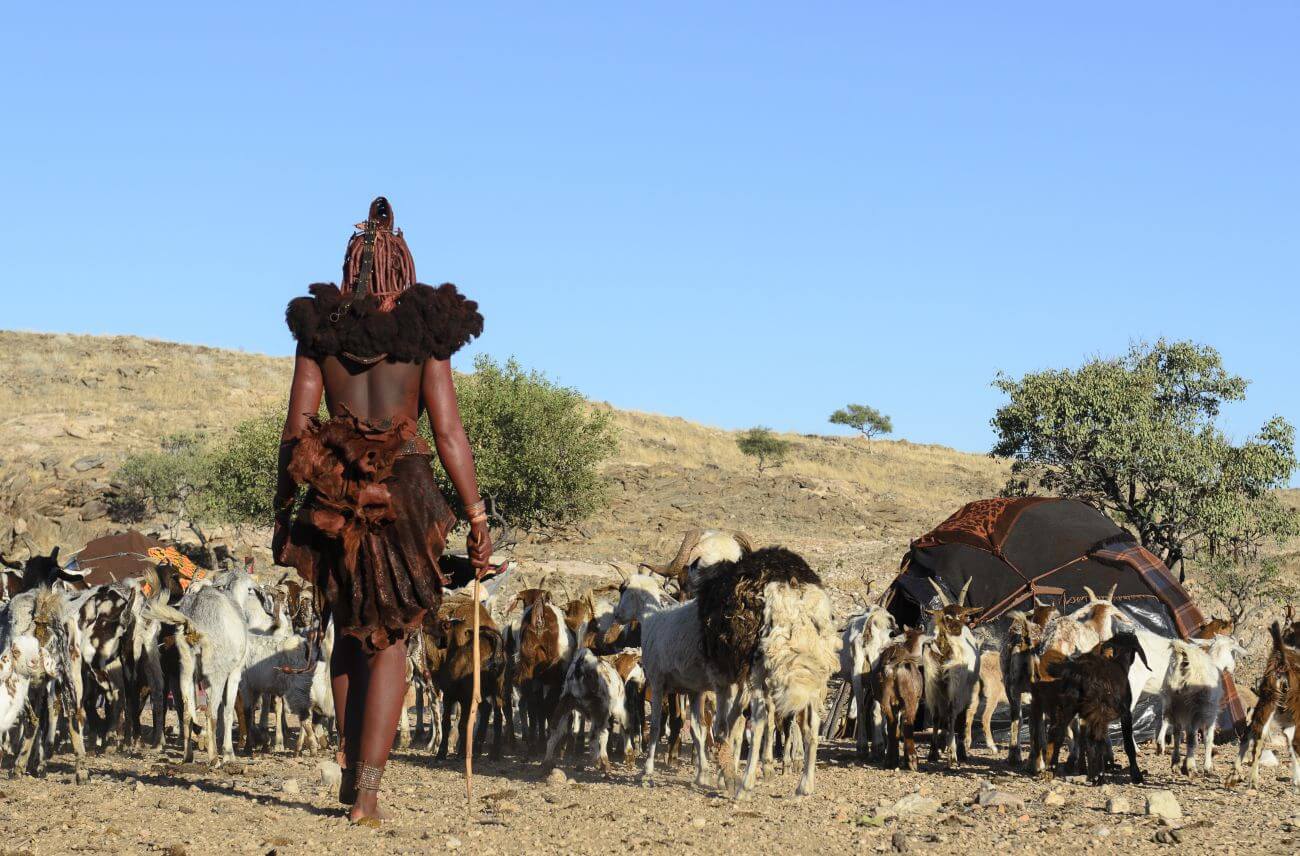
The Ovahimba, known in our language as Himba, are semi-nomadic people who live traditionally and are known for their characteristic appearance and their original, nature-loving culture. Their red skin and elaborate hair are particularly striking, but the ethnic group is characterized by much more. They are one of the last peoples in southern Africa who largely adhere to their traditional way of life, although the influences of modernity are already knocking at the door. The Himba are hunters and gatherers and also keep livestock.
Originally, the Himba emerged from the Herero group. In the 16th century, they split off and adapted to the harsh, dry climate of the Kaokoveld. Over time, they developed their own cultural identity, which fascinates us so much today. Droughts, livestock deaths, raids, colonial interventions and conflicts threatened the survival of the Himba in the 19th and 20th centuries. Thanks to their adaptability and strong sense of community, they managed to defy the adverse circumstances.
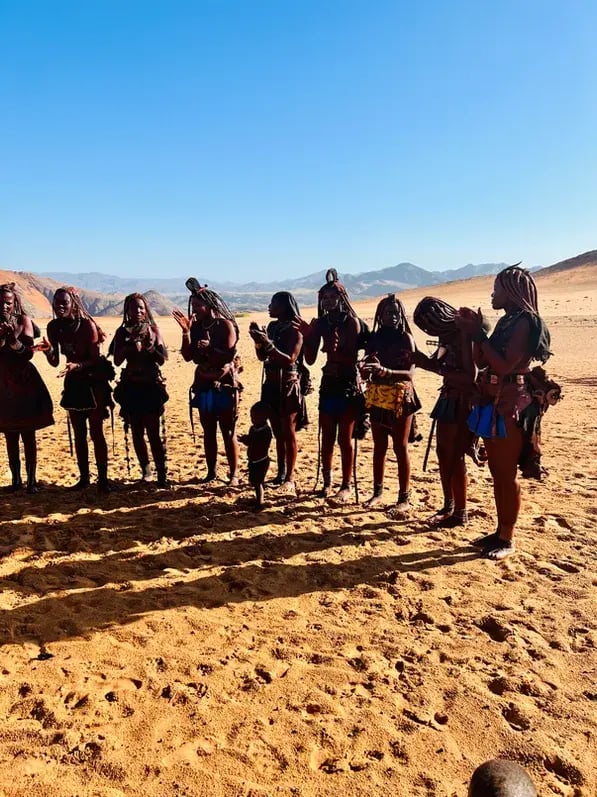
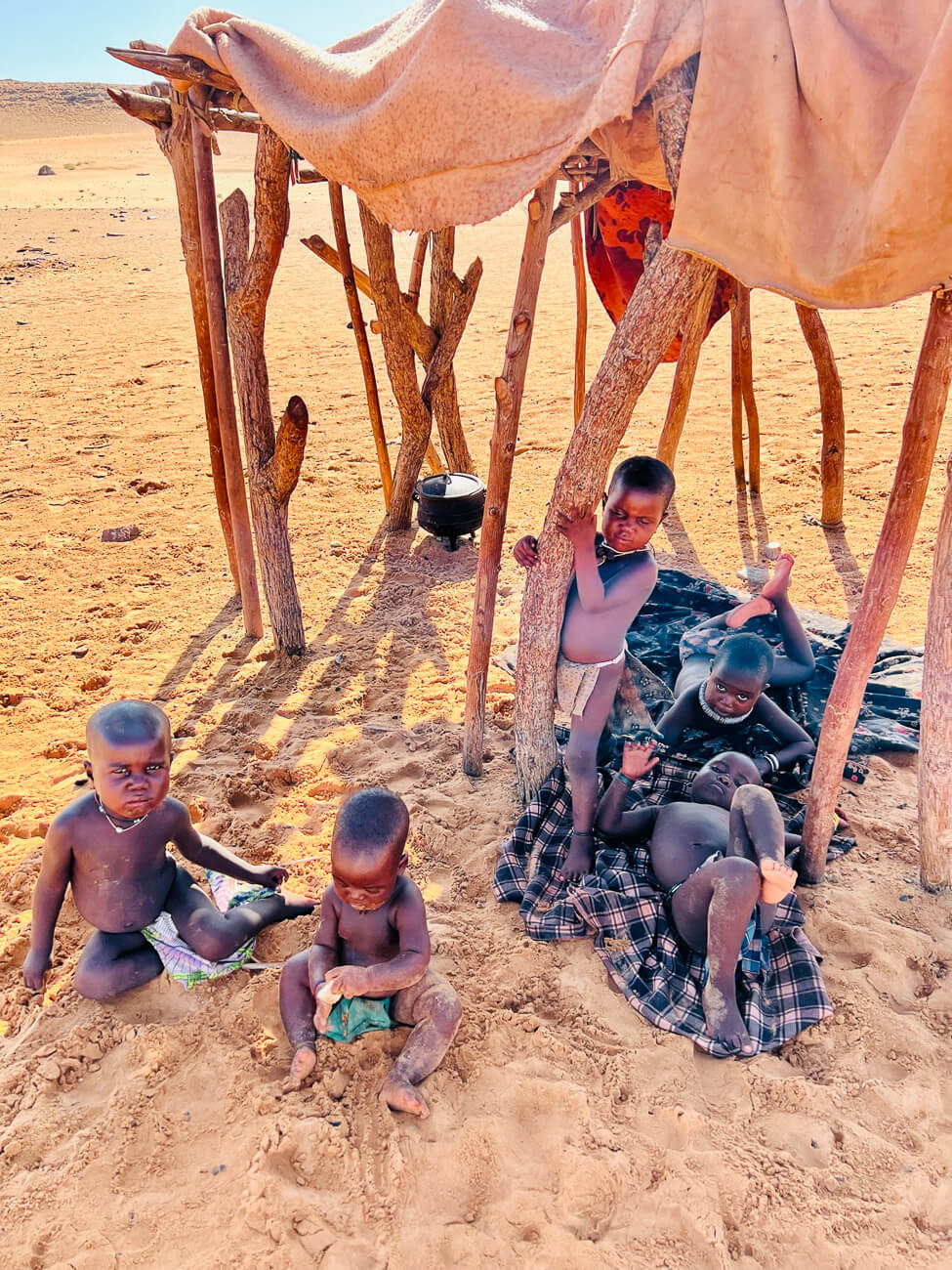
Life in harmony with nature
The life of the Himba is characterized by a close connection to nature. They live in small, widely scattered settlements with mud huts, so-called kraals, which are usually arranged around a central cattle enclosure. Sheep, goats and cattle are at the heart of the Himbaic economy and culture. The livestock not only provide food but also wealth and serve as a means of exchange for sugar, tea and maize flour.
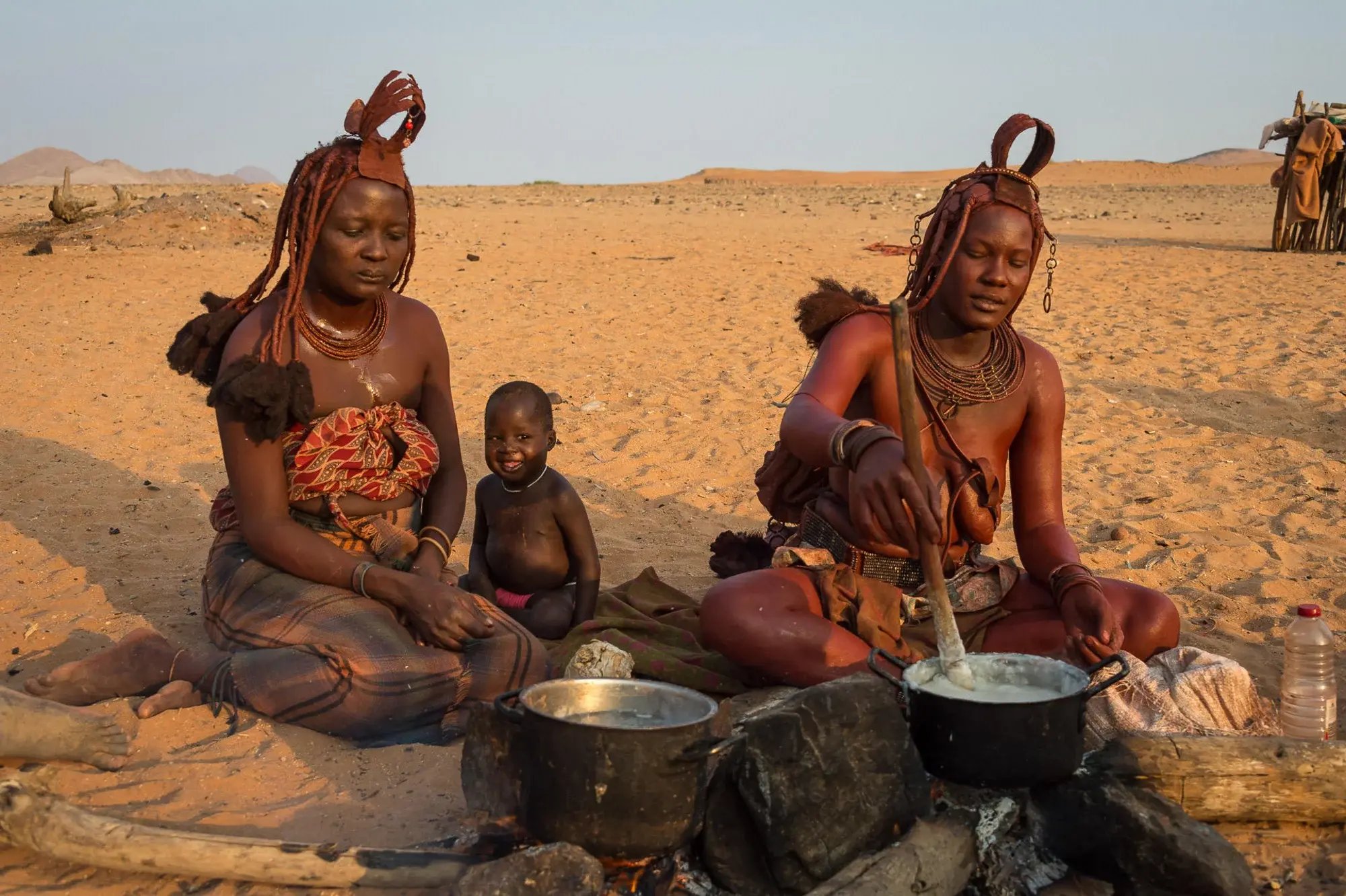
The day starts early, often before sunrise. The cows are milked, butter is made and cooked over an open fire. Sand and ash and a special cream replace the morning toilet, as water is a rare commodity in the dry north of Namibia.
The roles in the social structure are clearly distributed: Men take on the leadership of their communities, keep the peace and move around with the herds of cattle. Women are responsible for housework, children and personal hygiene, among other things. Children are given responsibility from an early age, for example milking the animals or fetching water - it often takes up to an hour to walk to the nearest water source in the dry season.
The extended family plays a central role in Himba culture: community, mutual support and the passing on of knowledge characterize the way people live together. Elders are respected and rituals and stories are passed down orally. Relatives are often spread across many villages, so a Himba passing through will always find a welcome place to sleep.
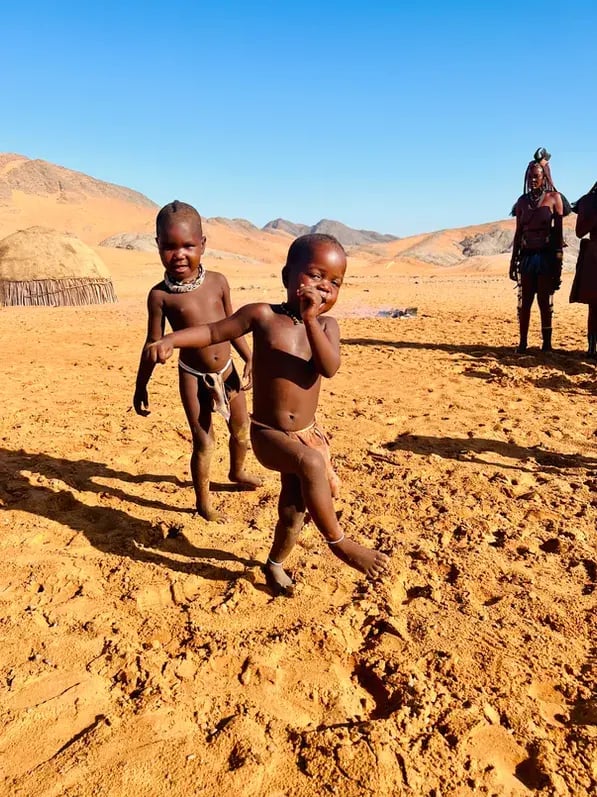
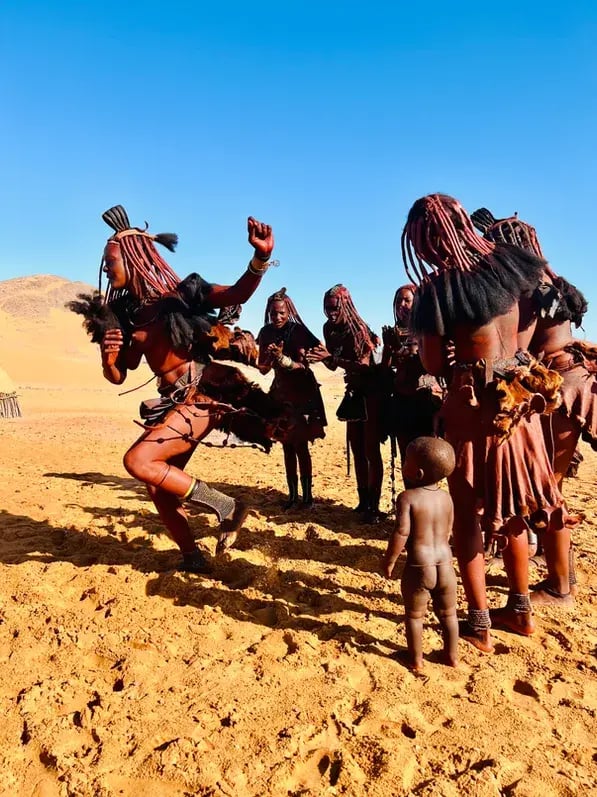
Personal hygiene, hairstyles and jewelry with meaning
Characteristic of the Himba is their distinctive appearance; nothing is left to chance when it comes to appearance. Everything has a meaning; they combine beauty with utility.
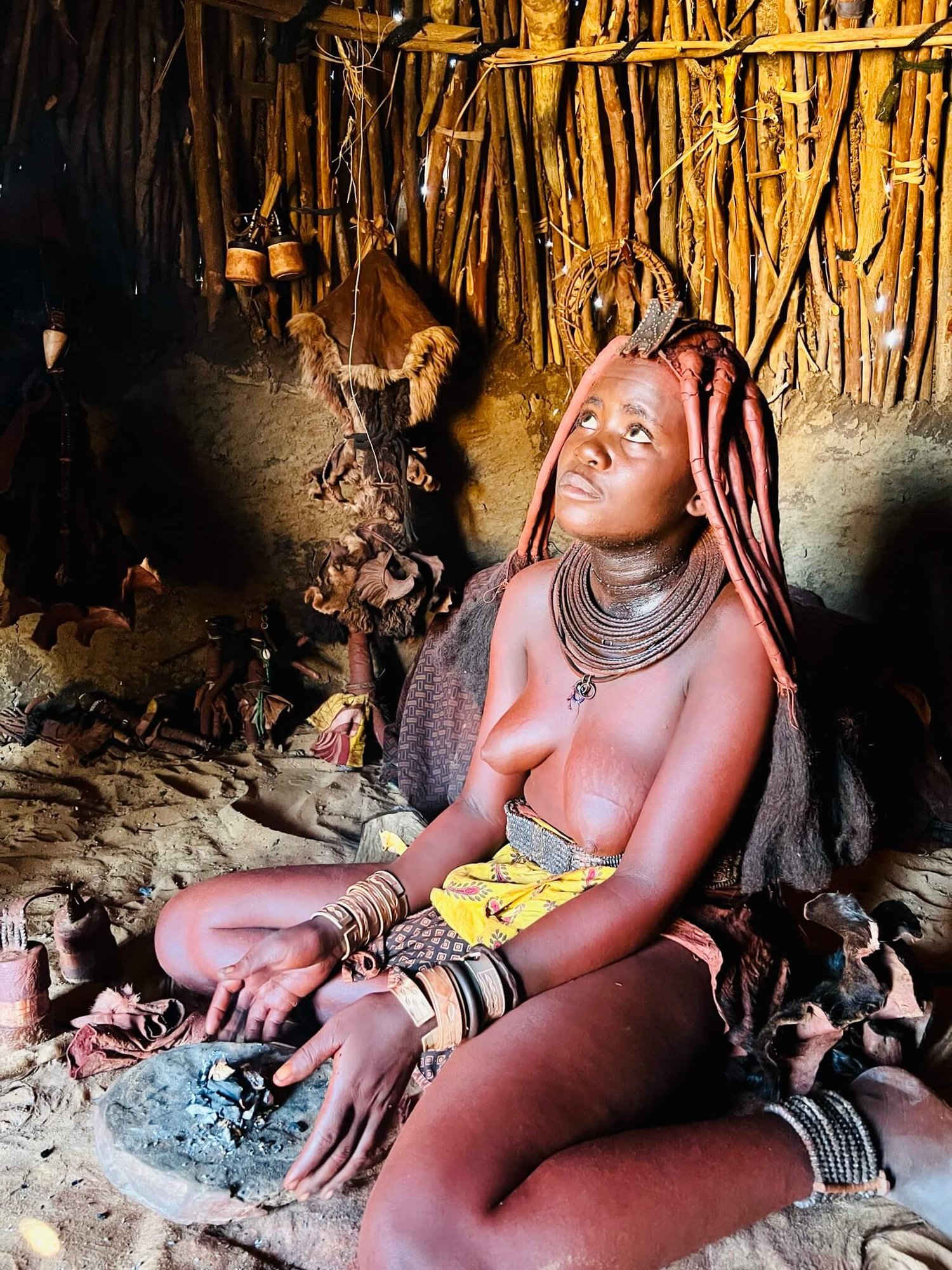
Red body paint: Himba women cover their skin with otjize, a homemade paste made from butterfat, ochre and aromatic herbs. Otjize protects against the sun and insects and keeps the skin supple. In addition, red skin is an expression of identity, pride and femininity in women.
Elaborate hairstyles: The hairstyle goes hand in hand with the respective stage of a person's life: young girls wear two braided plaits that reach over their forehead and down to their face. Young women are given elaborate strands of hair treated with otjize, the ends of which may be made of animal hair. Married women cover their hair with a leather headdress. Boys and unmarried men have a shaved head with a braided plait on top. Married men, on the other hand, pile up their hair and cover it with a leather headscarf, similar to the women.
Artistic jewelry: Himba jewelry consists of copper, leather, beads and shells, among other things. Here, too, nothing is left to chance: pieces of jewelry such as necklaces and anklets can reveal a woman's social status, age and number of children.
Tradition meets change: the challenges facing the Himba
How long can the Himba maintain their way of life in this fast-moving and globalized world? How much change is possible without losing their identity? These are challenging questions that both the Himba and Namibian society, as well as visitors who want to travel sustainably, have to deal with.
The remoteness of the Kaokoveld is increasingly permeated by the influences of the outside world. Schooling, major construction projects, tourism, new roads and mobile phone networks are changing the region. The Namibian dollar is becoming the new currency and is slowly replacing barter transactions with goats. Climate change is also taking its toll with longer periods of drought and unsafe grazing conditions.
All of this means that (young) Himba are increasingly caught between tradition and modernity. Some leave their villages to work in cities. Others return with new perspectives and experiences. This sometimes leads to conflicts between the generations within the communities. It is to be hoped that respectful solutions can be found to the challenges of these times. But a look at history also shows how resilient and resistant the Himba are.
Tips for a respectful visit to a Himba community
For many families traveling to Namibia, visiting a Himba village is one of the most memorable experiences. If they treat the Himba with respect, young and old alike can learn a lot about cultural diversity and different ways of life.
In order for a visit to be a positive encounter for all sides, it is important to treat people with sensitivity. This includes
✔️ Only take photos with permission
✔️ Respect privacy
✔️ Do not make hasty judgments
✔️ Meet at eye level
A particularly enriching exchange is often achieved when a local guide is present - ideally someone from the Himba community. He or she knows the language, customs and background and can help to build bridges and provide sensitive support for any uncertainties.
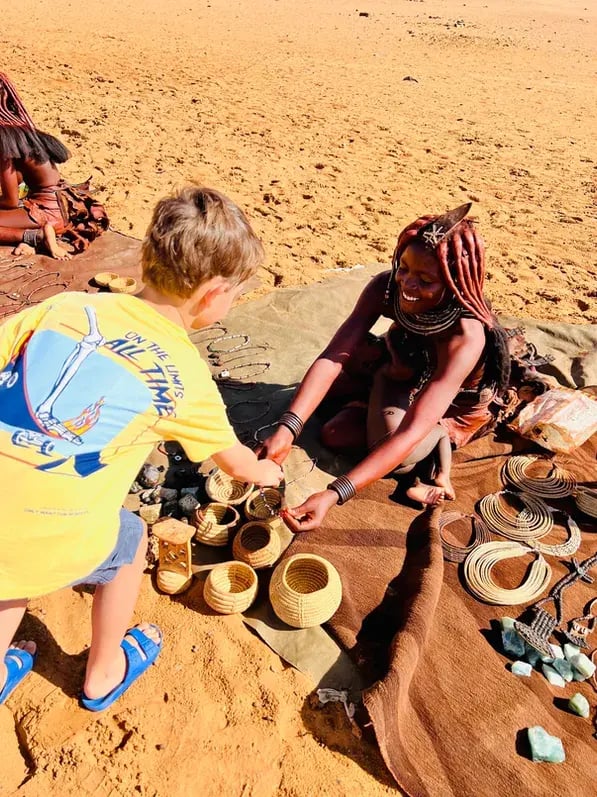
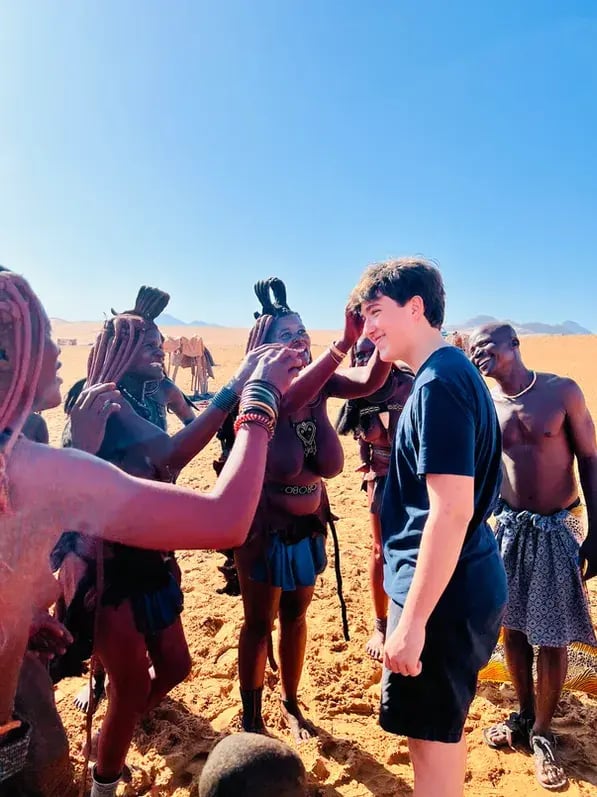
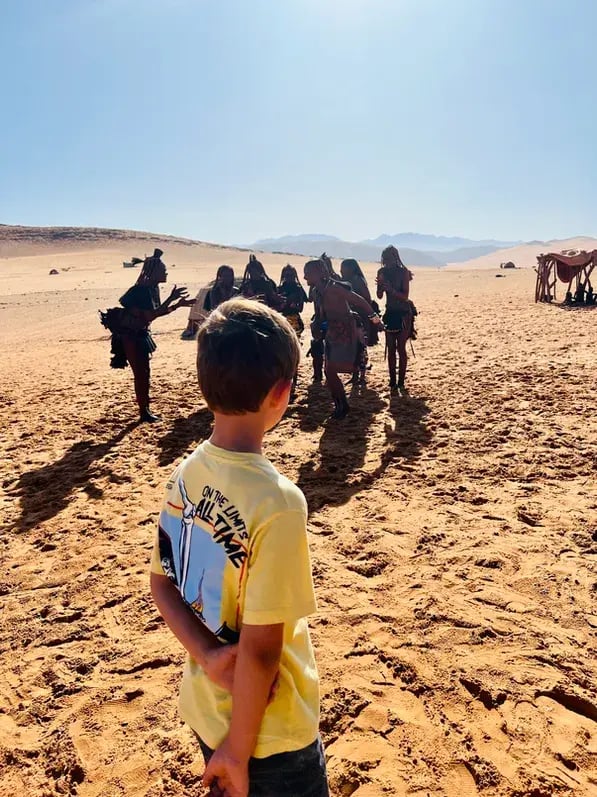
Families who travel consciously can build bridges: between worlds, cultures and their own ideas. Children and adults break down prejudices and fears of contact and get to know a people who are unique in their pride, culture, beauty and resilience.





.jpg?width=352&name=North_Island_privat_The_Family_Project%20(27).jpg)